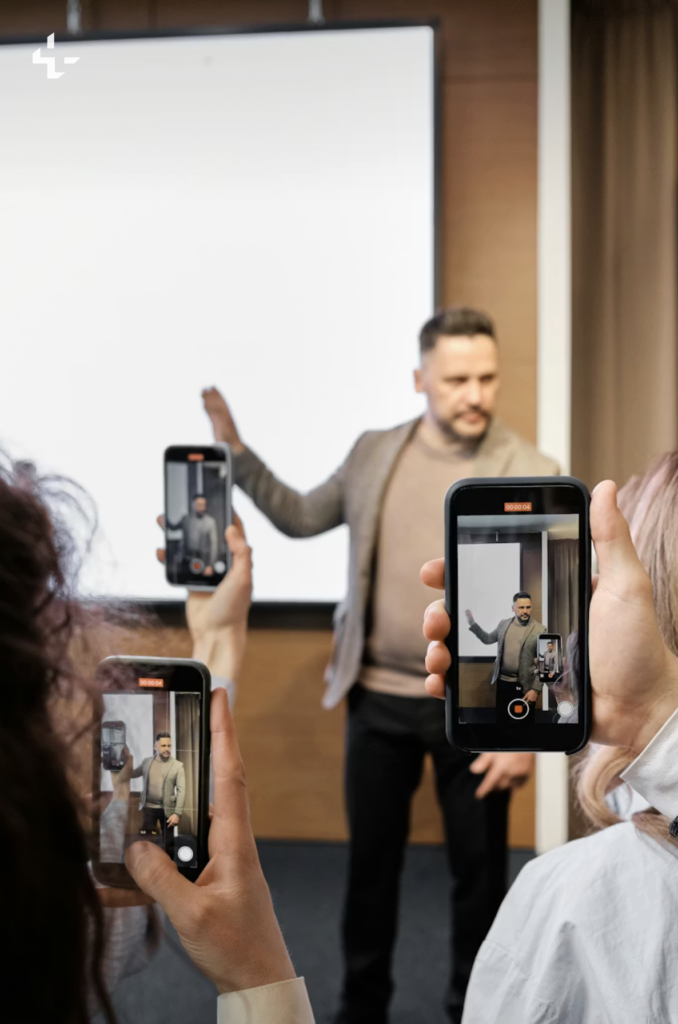
Photo by Andrej Lišakov on Unsplash
Explore the video provided and reflect on the themes of a PLN in a professional capacity.
After watching a TEDx talk, I gained a more practical understanding of the professional significance of PLNs. One aspect of the video that struck me deeply was his rejection of simplistic calls for young people to “disconnect.” Instead, he emphasized that online and offline worlds are fundamentally intertwined. Social media has become an integral part of young people’s lives, shaping how they communicate, express themselves, and construct their identities. Education that ignores this reality struggles to truly understand students.
This prompted me to rethink the purpose of PLN. Previously, I viewed them primarily as platforms for teachers to share resources, but now I see they can also help us understand the digital environment students inhabit. Young people are adept at navigating different platforms and presenting varied facets of themselves on social media. If educators observe these behaviors solely from an external perspective, they risk disconnecting from students’ authentic lives. From a professional perspective, engaging with PLN isn’t just about self-improvement—it’s also about better understanding the experiences of today’s students.
Simultaneously, I’ve realized that educators’ online participation itself constitutes an expression of identity. How we speak, how we discuss technology and student issues, all reflect our understanding of the role of the educator. Therefore, on a professional level, PLNs aren’t merely learning tools—they are a process of continuous reflection and recalibration of our professional positioning.
Which social media platforms are beneficial for education?
In practical use, I’ve found different platforms serve education in distinct ways. For instance, LinkedIn leans toward building professional networks and sharing education-related expertise. Twitter, with its hashtags, makes educational discussions more immediate and open. YouTube offers abundant instructional videos and open courses, making learning more accessible. WordPress provides students a platform for freely creating and sharing their ideas.
Furthermore, I believe the open web environment decentralizes knowledge, empowering everyone to become contributors. This indeed expands participation opportunities for educators. However, I also recognize social media isn’t always positive. Algorithms may reinforce echo chambers where users predominantly see content aligning with their existing views. Additionally, many discussions remain superficial due to the fast pace, lacking depth. Thus, social media both advances educational discourse and potentially compromises discussion quality.
How does social media reflect professionalism when working with vulnerable groups?
I believe educators must exercise heightened sensitivity when using social media while working with minors or other vulnerable groups. As mentioned in the video, digital footprints persist long-term, requiring educators to be mindful of the potential impact of their online behavior. Establishing clear boundaries is particularly crucial in such contexts. For instance, educators should avoid private interactions with students through personal social media accounts and must strictly protect students’ privacy information.
Similar to what I observed on China’s social media platform Weibo, some teachers share classroom photos or videos of student performances. Even if the intent is to document educational achievements, comments sections sometimes feature evaluations of students’ appearance or performance. This highlights how students lose control over their image once publicly displayed. While the video emphasizes the enduring nature of digital footprints, students—especially minors—may not fully grasp the implications of such exposure. Therefore, educators must exercise heightened caution on social media when engaging with vulnerable groups.
Ultimately, openness does not equate to recklessness. On the contrary, the more open the online environment, the more educators must consciously adhere to professional standards. Especially when interacting with vulnerable groups, online conduct impacts not only personal reputation but also the safety of others and the credibility of institutions.
Reference:
Couros, A. (2010). Developing Personal Learning Networks for Open and Social Learning. In G. Veletsianos (Ed.), Emerging Technologies in Distance Education (pp. 109–128). Athabasca University Press. https://doi.org/10.15215/aupress/9781897425763.007
TEDx Talks. (2016, March 28). Incorporating & accounting for social media in education | Harry Dyer | TEDxNorwichED [Video]. YouTube. https://www.youtube.com/watch?v=ZteEZbAtsNI
I really related to your post because I had similar views after watching the TEDx talk and doing the readings. The idea that online and offline worlds are intertwined stood out to me too. It changed how I think about PLNs, especially in terms of understanding students and their digital lives rather than just sharing resources.
Your example about teachers posting classroom photos was powerful and realistic. It showed how careful we have to be, especially when working with vulnerable groups.
I really like your point that a Personal Learning Network (PLN) is not only a learning tool, but also a process of constantly reflecting on and adjusting our professional identity. When I used to think about PLN, I mostly saw it as just a learning tool. However, your perspective made me realize that PLN can also be an opportunity for us to think critically about ourselves. In the future, when I learn through online networks, I will try to include more self-reflection and evaluation in my learning process.
Hey I really like your personal connections to this subject, it reflects well in your blog. I also think your point about connecting to Chinas social media platform “Weibo” where teachers sometimes share a students identity, and the students lost control of their image once publicly shared. Overall, good blog post!